Going to keep this one short.
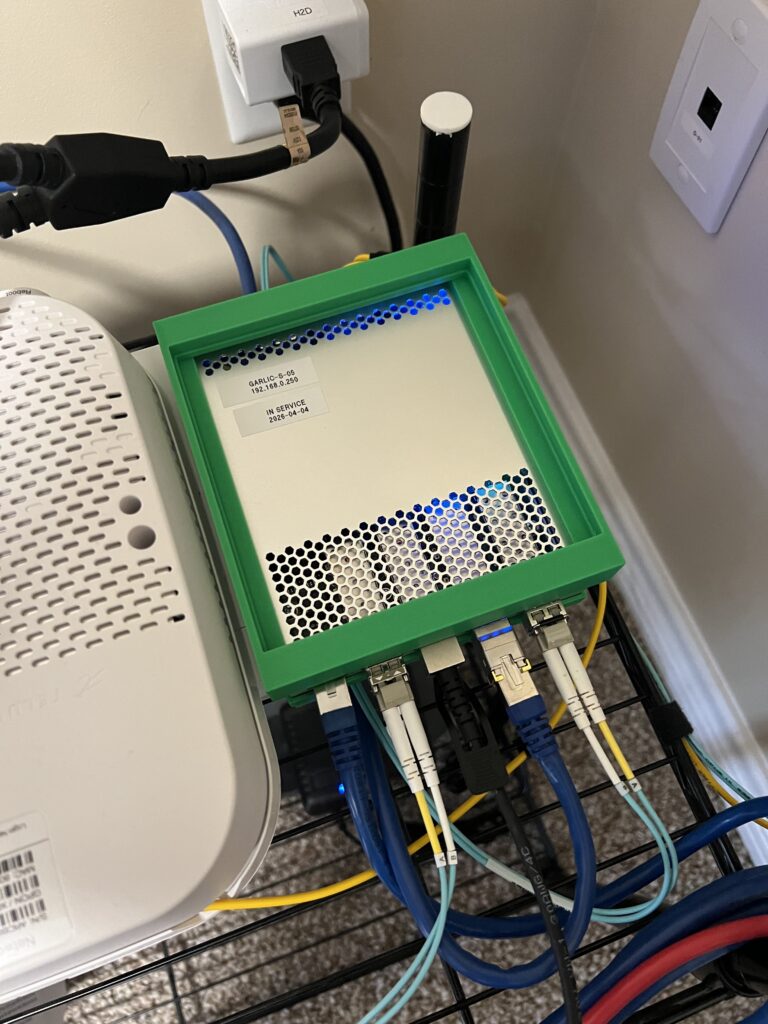
Purchased a Mikrotik CRS305-1G-4S+in to add a few 10GBe SPF+ ports to my office. Installed the following SFP+ modules in it:
- FS.com Mikrotik S+RJ10 Compatible 10GBASE-T SFP+ Copper 30m RJ-45 Transceiver Module (LOS)
- FS.com Mikrotik 10G SFP+ Passive Direct Attach Copper Twinax Cable
- 2x FS.com Mikrotik S+85DLC03D Compatible 10GBASE-SR SFP+ 850nm 300m DOM Duplex LC/UPC MMF Optical Transceiver Module
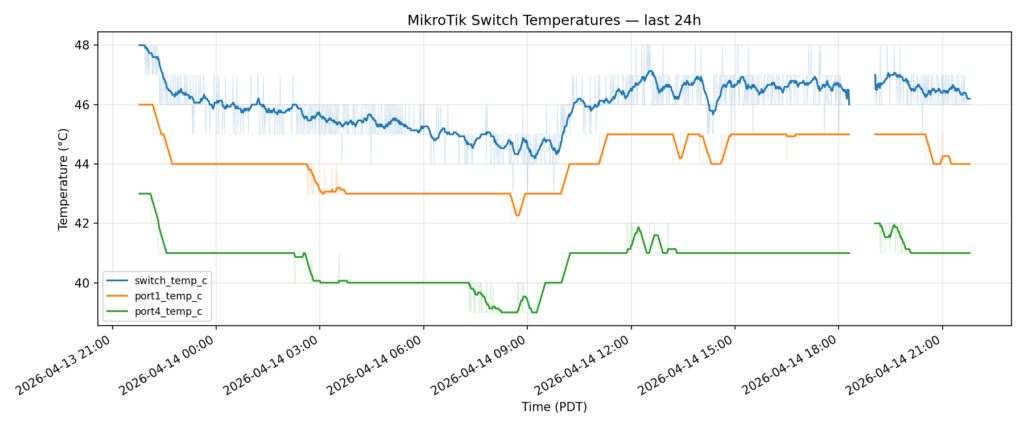
When I initially hooked everything up I did some temperature logging and found this little switch runs fairly warm and so do the SFP+ modules:
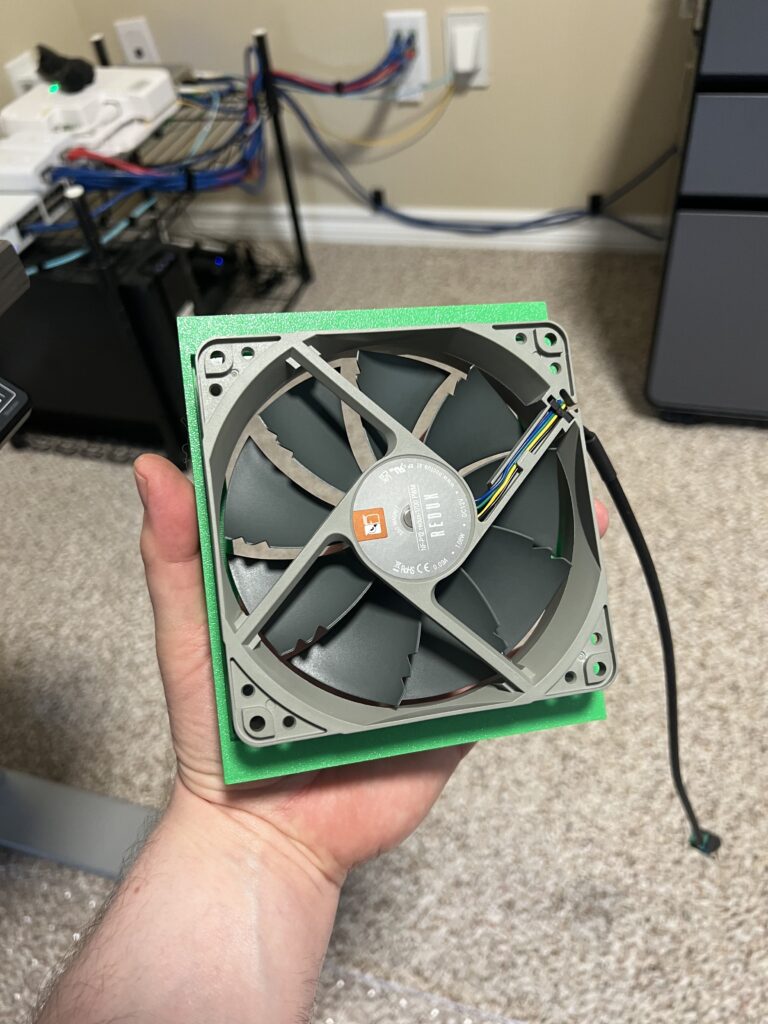
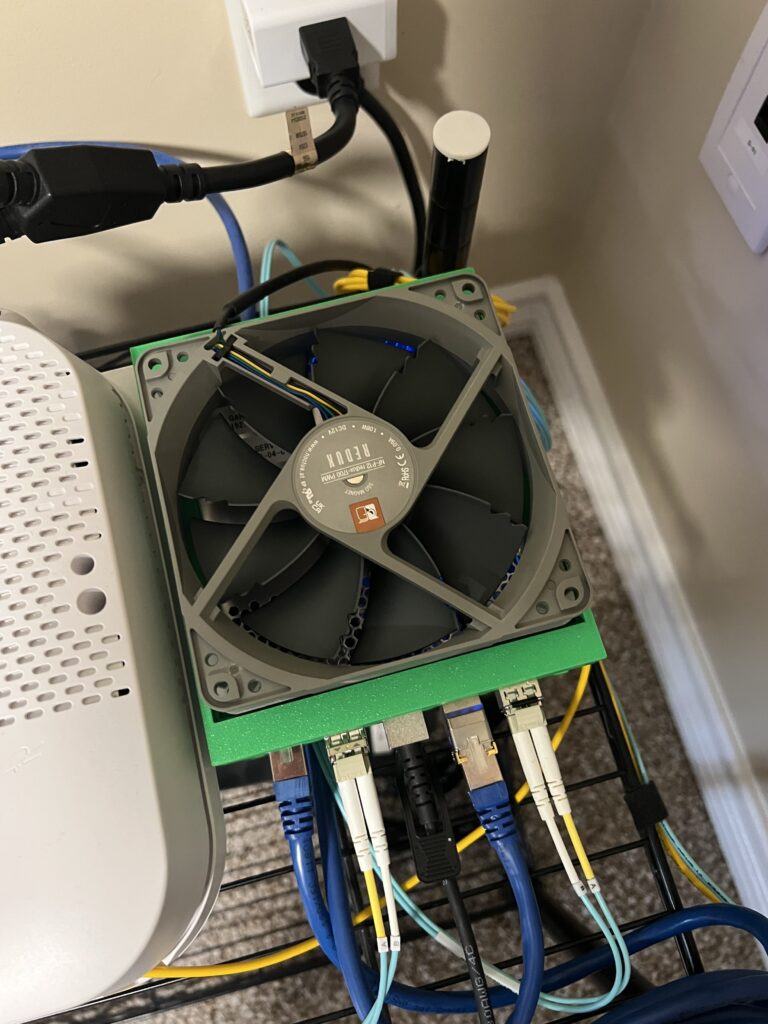
Since I have a 3D printer and some Noctua 120mm fans lying around, I figured why not slap one on top of it oriented to pull air through the switch and out the top and see what happened.
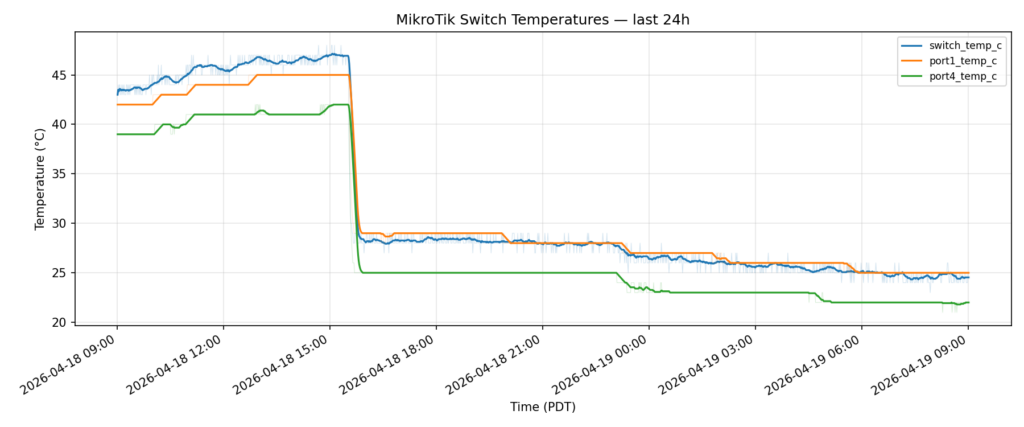
I used a Noctua NF-F12 IndustrialPPC-2000 IP67 PWM first and found it too loud so I ended up swapping it out after 24 hours but the temperature drop was drastic. Switch temperatures drop from 42C (107F) down to 25C (77F) and SFP+ modules drop from ~47C (116F) to ~28C (82F) compared to no fan.
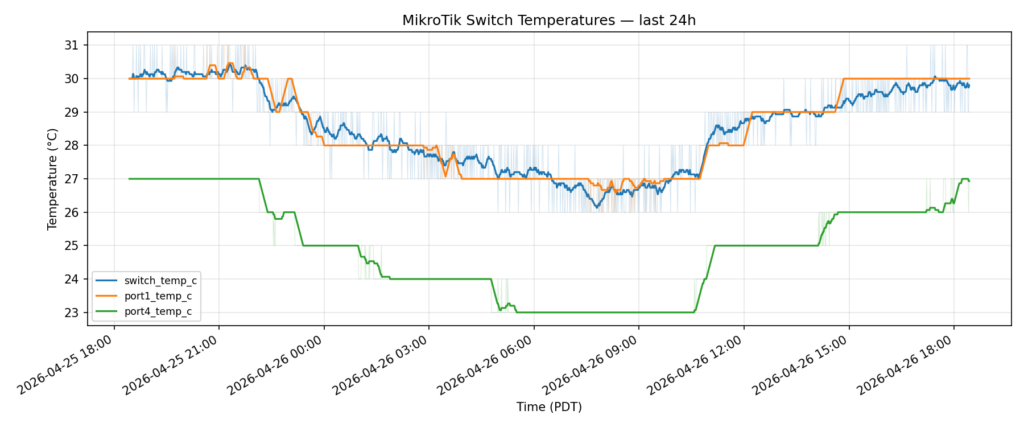
I then switched to a Noctua NF-P12 Redux-1700 PWM which was quieter and the temps went up but there is still significant improvement. Switch temperatures drop from 42C (107F) down to 27C (80F) and SFP+ modules drop from ~47C (116F) to ~30C (86F) compared to no fan.
Do you need to bother actively cooling one of these things? Probably not. The FS.com SFP+ transceivers I am using and the Mikrotik switch are all rated up to 70c. Since I had all the parts lying around anyway I’m going to leave the fan in place until it annoys me.
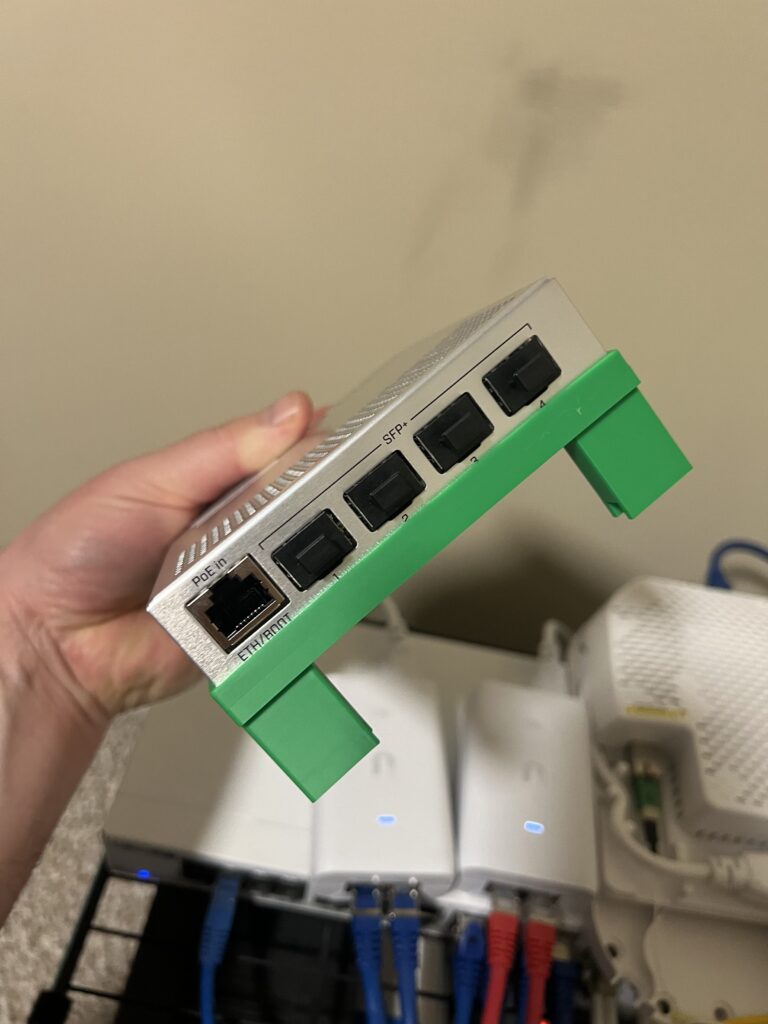
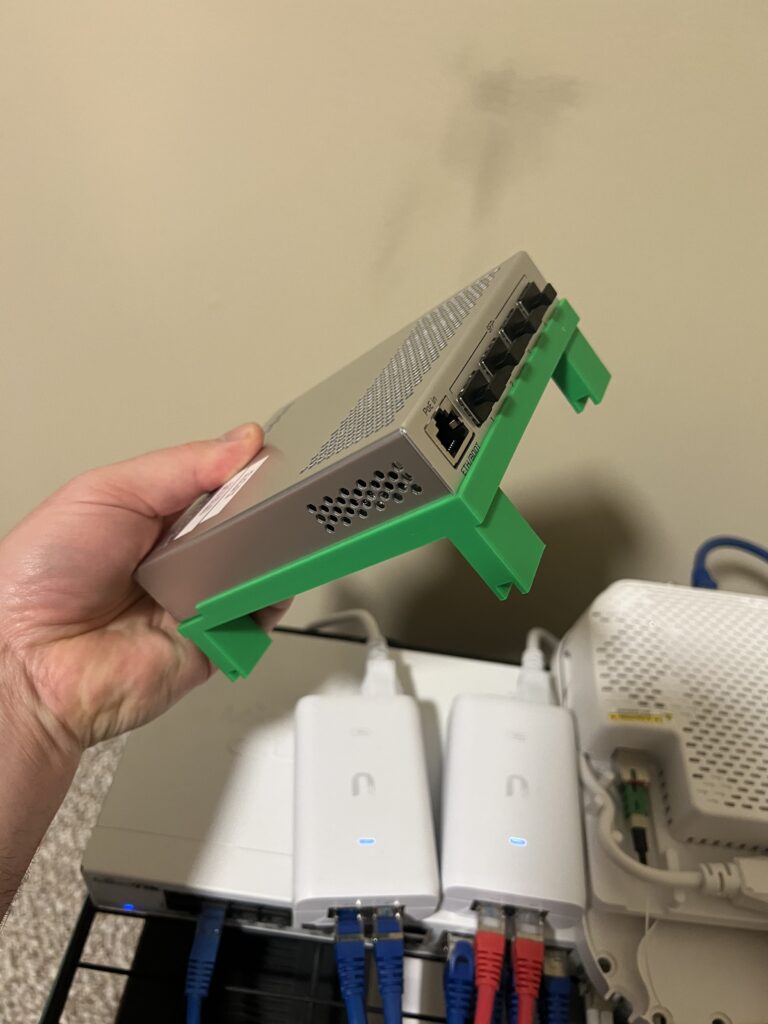
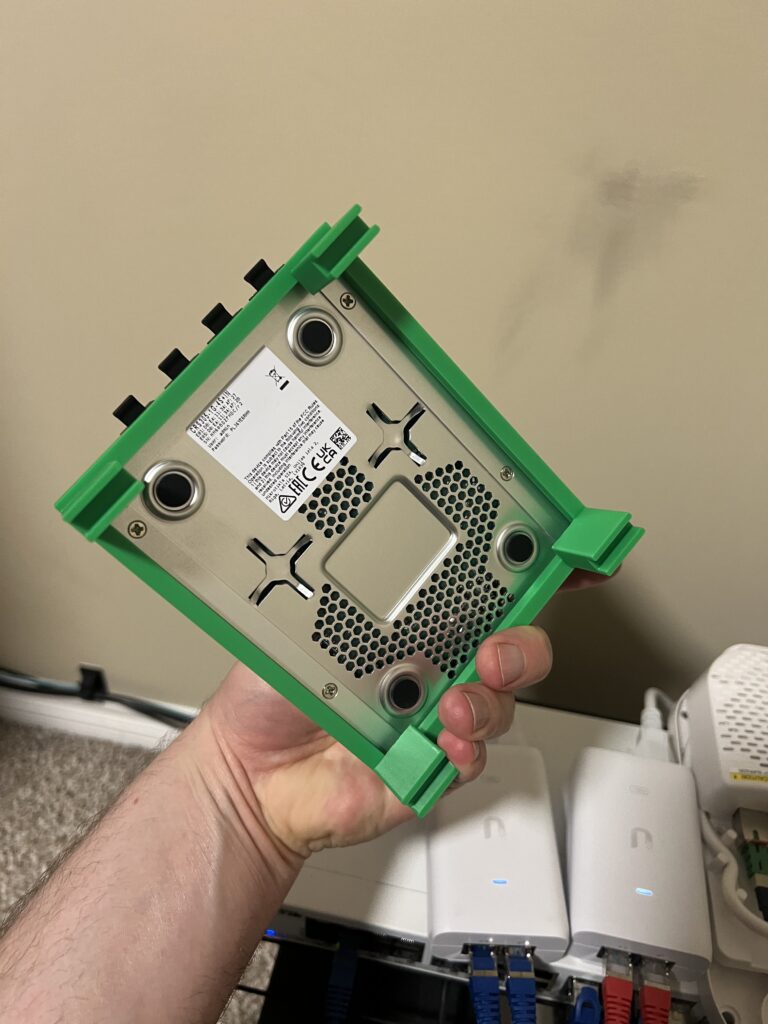
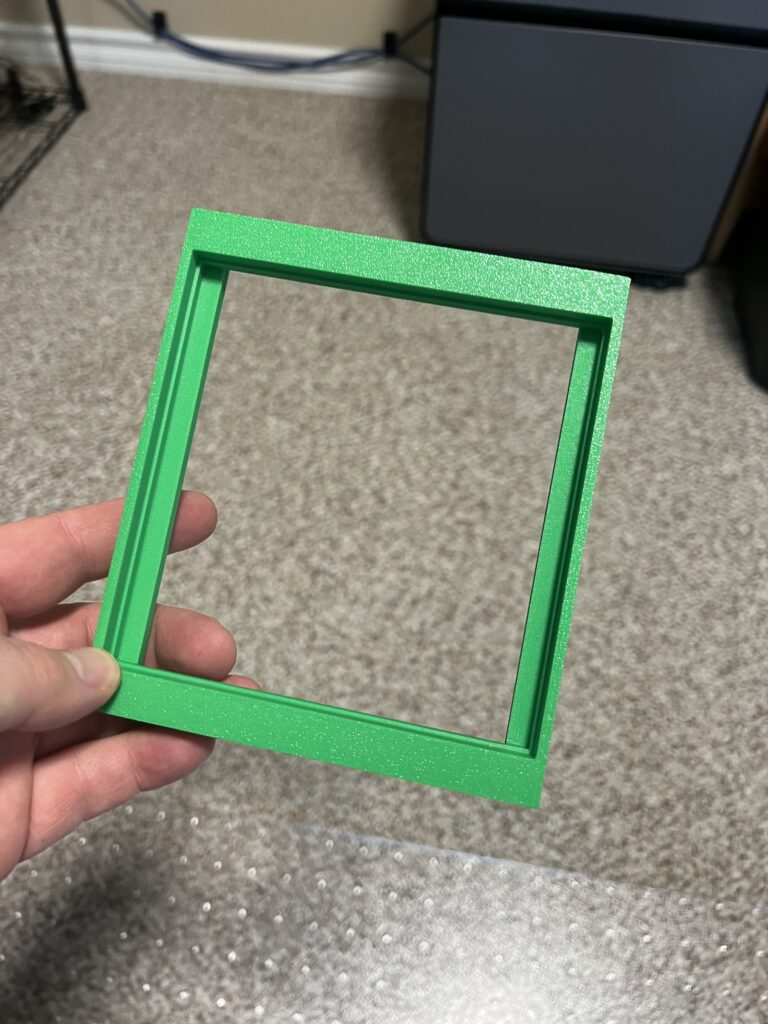
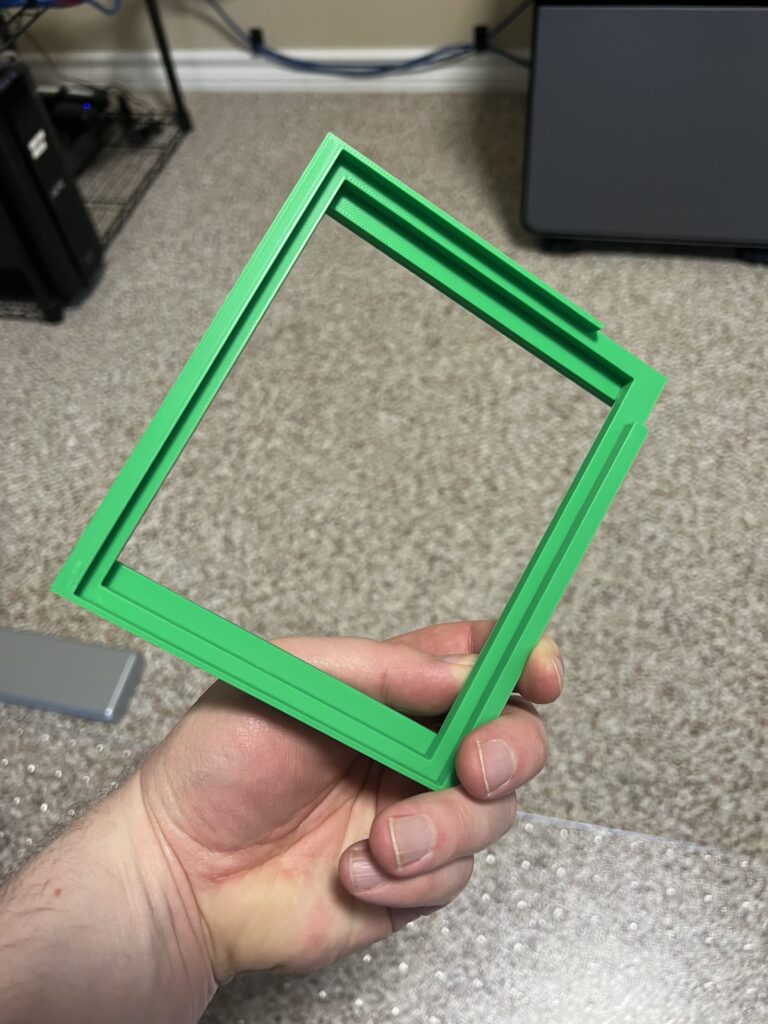
You can find the models you 3D print your own mount at Markerworld (3MF and STL format): https://makerworld.com/en/models/2723310-mikrotik-crs305-1g-4s-stand-and-120mm-fan-mount
STL mirror here: https://www.pickysysadmin.ca/static/CRS305-1G-4S-120mm-FanMount-Riser.zip
Print Settings: Bambu PLA, 0.2mm layer, 2 walls, 15% infill (gyroid), auto-supports (Bambu PETG for the interface between supports and model)
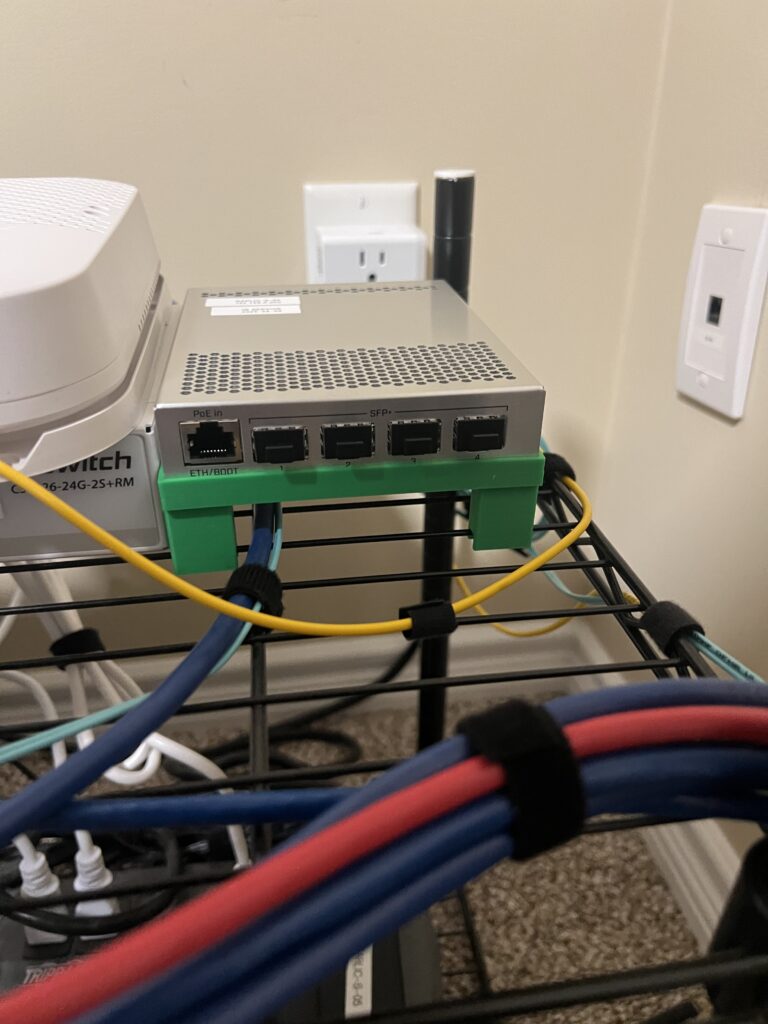
Everything is friction fit, you don’t need to print the feet but they are useful if you happen to use the same Amazon Basics wire shelf as me and want to run some cables under the switch.